İçindekiler
- Strabismus in Babies: Symptoms, Causes, and Treatment Methods
- What Are the Symptoms of Strabismus in Babies?
- Main Causes of Eye Misalignment in Infants
- Treatment Options for Pediatric Strabismus
- Strabismus Surgery in Babies
- Understanding “False Strabismus” (Pseudo-strabismus)
- Sıkça Sorulan Sorular (SSS)
- When should treatment for strabismus in infants begin?
- Can glasses or occlusion (patching) therapy correct permanent strabismus in infants?
- Is strabismus surgery in infants performed using laser?
Strabismus in Babies: Symptoms, Causes, and Treatment Methods
Strabismus in babies, commonly known as eye misalignment, is a condition where the eyes lose their parallelism and focus in different directions. Early diagnosis is critical to prevent permanent vision issues such as amblyopia (lazy eye) and loss of depth perception.

What Are the Symptoms of Strabismus in Babies?
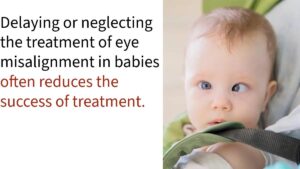
The most evident symptom of strabismus is the loss of synchronization between the eyes. While one eye focuses on a target, the other may shift inward, outward, upward, or downward.
Other warning signs that parents should watch for include:
- Squinting one eye, especially in bright sunlight.
- Tilting the head to one side to stabilize an image.
- Persistent watery eyes.
While temporary shifts are considered normal in newborns (0-90 days) as their binocular vision develops, any misalignment noticed after 3-6 months requires a specialist’s examination.

Main Causes of Eye Misalignment in Infants
Several factors can lead to eye misalignment in babies:
- Heredity: A family history of strabismus increases the risk for the baby.
- Birth Factors: Premature birth, low birth weight, or trauma during delivery are significant risk factors.
- Health Issues: High fever, convulsions, or certain illnesses during the mother’s pregnancy can contribute to the condition.
- Refractive Errors: High degrees of myopia or hyperopia can trigger strabismus.
- Neurological Factors: Sudden onset of strabismus may sometimes indicate neurological diseases or rare tumors, requiring urgent medical attention.
Treatment Options for Pediatric Strabismus
The primary goal of strabismus treatment in babies is to restore parallelism, gain depth perception, and ensure binocular vision (seeing with both eyes).
Treatment methods are decided based on the baby’s age and the underlying cause:
- Optical Treatment: If the misalignment is caused by refractive errors, specialized glasses (prismatic, cylindrical, or spherical) are prescribed.
- Medical and Occlusion Therapy: Medications may be used to treat underlying factors. If amblyopia (lazy eye) has developed, occlusion treatment (eye patching) is applied to exercise the weaker eye.
- Orthoptic Treatment: Used to improve depth perception and binocular vision.
Strabismus Surgery in Babies
If non-surgical methods are insufficient, surgical treatment may be necessary to adjust the eye muscles and ensure parallelism.
- Surgery is typically performed after the baby is at least five months old under general anesthesia.
- It is important to note that lasers are not used in these surgeries.
- In some cases, treatments like patching or glasses must continue after surgery to maintain vision quality.

Understanding “False Strabismus” (Pseudo-strabismus)
Many parents visit a specialist suspecting strabismus, only to discover it is false strabismus. This is an optical illusion where the baby’s eyes appear misaligned—usually due to a wide nasal bridge or the shape of the eyelids—but are actually functioning correctly. A professional eye exam is the only way to distinguish this illusion from real strabismus.