
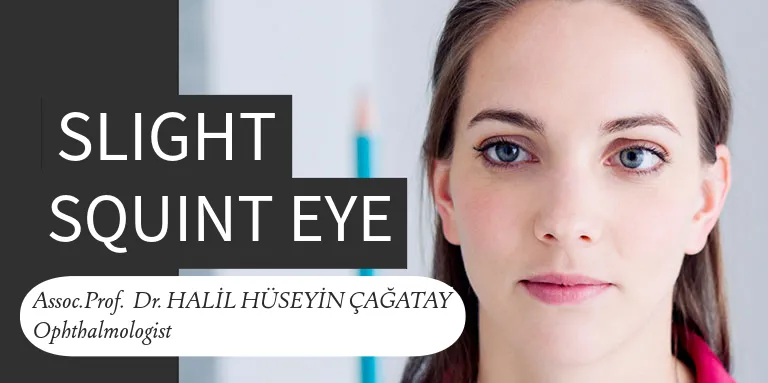
What is slight squint eye and how can it be recognized and fixed? Mild eye misalignment is the name given to the condition where there is no obvious misalignment in one of the eyes, but the eye misaligns slightly inward-outward or upward. So, is slight squint eye a serious problem? Is treatment required? How is it treated? We will answer these questions in this article.
İçindekiler
- Is it a real slight squint eye or pseudostrabismus?
- Examples of slight eye squint
- 1- Occasional outward deviation (Exotropia)
- 2- Inward deviation (Esotropia)
- 3- The group that has had strabismus surgery before and continues to have slight strabismus
- 4- Other
- In what situations should slight eye squint not be neglected?
- Is there a treatment for mild strabismus?
- What should we do in case of false strabismus?
- Frequently Asked Questions (FAQ)
Is it a real slight squint eye or pseudostrabismus?
Slight eye misalignment might be usually unnoticeable and sometimes easily recognizable. Slight squint eye occurs most frequently in two ways, the first is a narrow-angle and the second is; although it is not actually a strabismus , it is the appearance of a misalignment due to an anatomical difference in a person’s face, this is called pseudostrabismus. In the first case, there is a real strabismus, which can be described as a slight eye misalignment because the angle of deviation is narrow-low.
Examples of slight eye squint
1- Occasional outward deviation (Exotropia)
This situation manifests itself in different ways; To give an example of situations we frequently encounter in our daily working life; Occasional slight outward eye deviation that occurs when a person is tired or sleepy. This may sometimes happen only when looking away or looking up. Or there may be decreased vision in one eye and a slight inward or outward deviation in that eye. Rarely, it may occur as an upward slide.
2- Inward deviation (Esotropia)
Another condition is slight inward eye deviaiton, which only occurs when focusing on something close up. This condition mostly occurs in childhood and may associated with hyperopia. Other type of inward occurs when the patient looks far and blurry vision or double vision occurs at the same time. When the patient looks at nearby objects, there is no inward eye squint or double vision. There is an other type of esotropia is related to high myopia which is called also as Heavy Eye Syndrome.
3- The group that has had strabismus surgery before and continues to have slight strabismus
Another situation we frequently encounter in our clinical practice is; patients who have previously undergone surgery for strabismus, but whose strabismus continues to be mild. In these cases, although a greater degree of correction has been achieved compared to the pre-operative period, slight eye misalignment continues.
4- Other
This strabismus can occur in different ways, such as upward deviation of the eye in some viewing positions, absent-minded deviation, diagonal eye deviation, and congenital slight deviation.
In what situations should slight eye squint not be neglected?
- If it is affecting social life
- New onset eye squint
- Slight eye squint in children and babies
- Double vision
- Other accompanying disease
- Visual impairment
Is there a treatment for mild strabismus?
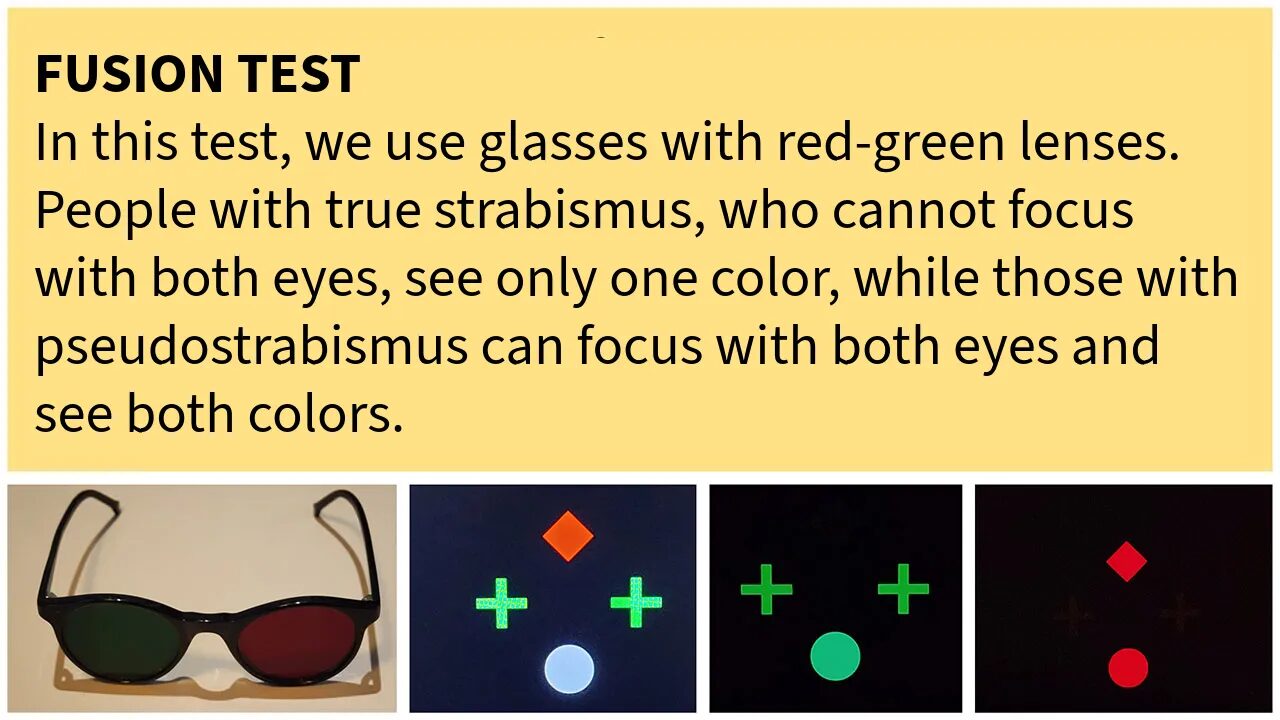
If there really is an eye deviation, that is, if there is no false strabismus, then a treatment can be considered. To detect this, we perform strabismus examination and binocular fusion tests. These tests; it is a three-dimensional vision test and a fusion test performed with red-green glasses.
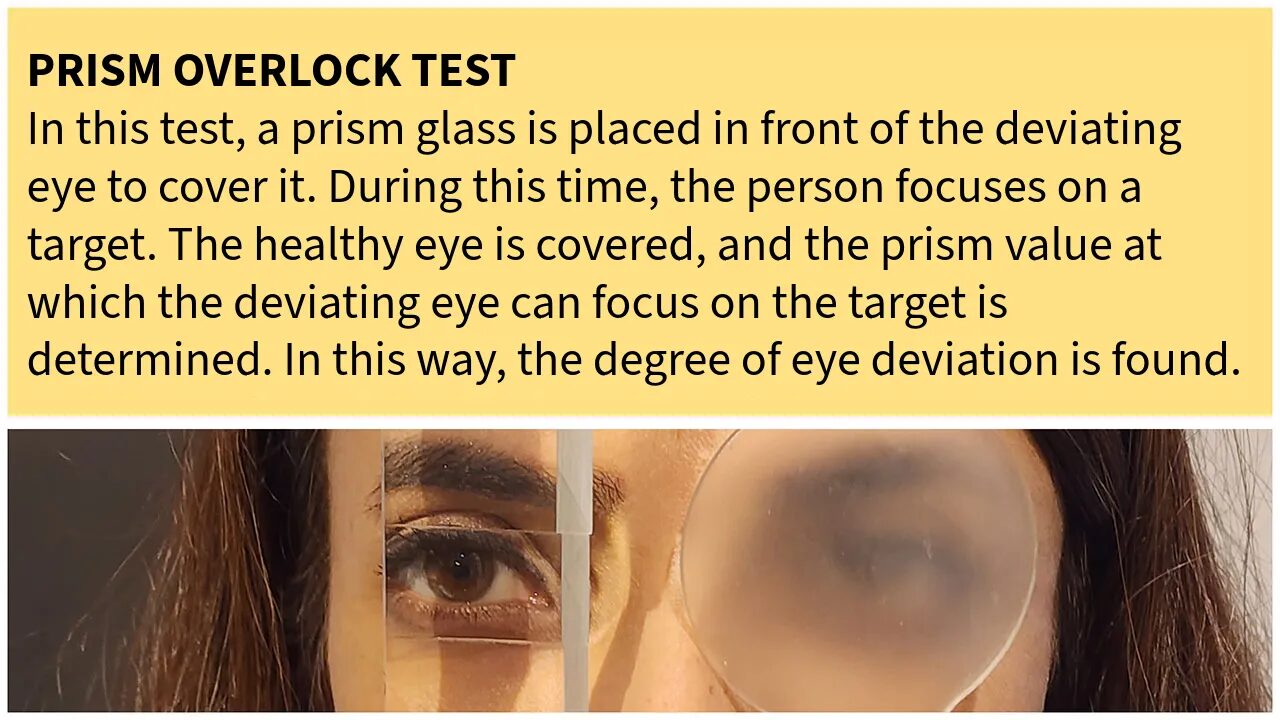
In addition to these tests, if strabismus is detected, we measure the eye deviation angle with prism lenses . It may also be necessary to make these measurements in different gaze positions of eyes. And if these deviation angles detected are at an amount that we can correct with surgery, then we inform our patient about the surgical option . We provide treatment to patients who are suitable and accept the surgery by providing information about the success and possible risks of the surgery.
Finally, this should not be forgotten; Strabismus is a serious disease. It can affect both the visual function of the person and, as an aesthetically important problem, it can affect the person’s social life. For this reason, a slight eye misalignment should not be ignored and it should not be forgotten that it may indicate a serious health problem.
For your questions about eye strain, you can contact us via our Whatsapp contact line.

What should we do in case of false strabismus?
On the other hand, if there is false strabismus rather than real strabismus , this diagnosis may sometimes change over time in infants and children. Sometimes, true strabismus may not be revealed during the first eye examination in babies. For this reason, it is very important to repeat periodic detailed eye examinations.
What is written in this article is for informational purposes only and does not replace an eye examination. Remember that you can get detailed and most accurate information about your disease after the examination.
Click to follow us on Instagram .

Frequently Asked Questions (FAQ)
1. What is a slight squint eye (mild strabismus)?
A slight squint, also called mild strabismus, is a small eye misalignment in which one eye turns slightly inward (esotropia), outward (exotropia), or upward. Even when the deviation angle is small, it may affect binocular vision and eye coordination.
2. What is the difference between a slight squint eye and pseudostrabismus?
Slight squint eye is a real eye alignment problem, while pseudostrabismus only appears like a squint due to facial anatomy, such as a wide nasal bridge. A detailed strabismus examination and binocular vision tests are needed to confirm the diagnosis.
3. What are the symptoms of mild eye misalignment?
Common symptoms include occasional eye drifting, double vision, blurred vision, eye strain, reduced depth perception, or squinting when tired or focusing. In some patients, slight strabismus may only appear in certain gaze positions.
4. Can exotropia or esotropia be mild or occasional?
Yes, intermittent exotropia (outward deviation) or accommodative esotropia (inward deviation) can appear only when a person is tired, looking far away, or focusing on near objects. Even mild cases should be evaluated by an eye specialist.
5. What treatments are available for a slight squint in the eye?
Treatment depends on the cause and deviation angle. Options may include glasses for refractive errors, vision therapy, prism correction, or strabismus surgery if the eye misalignment affects vision or aesthetics.
6. When should a slight eye squint not be ignored?
You should consult an ophthalmologist if the squint is new, occurs in babies or children, causes double vision, reduces visual quality, or impacts social confidence. Early diagnosis helps prevent long-term visual problems.