

Eyelid Contraction (Blepharospasm) is the name given to the involuntary contraction of the eyelids . Although it is a very rare disorder, it occurs in individuals with conditions such as squeezing or closing of the eyelids. This condition is called blepharospasm and benign essential blepharospasm.
Although involuntary eye contraction occurs with different findings in each patient, the first symptom is generally known as an increase in the frequency of blinking. Involuntary eye contraction usually occurs in both eyes. But sometimes it can be seen in only one eye. The increase in blinking frequency turns into spasm over time. The disorder, which is characterized by symptoms such as muscle contraction in the area called focal dystonia, is the 2nd most common neurological disease in the region.
The incidence of blepharospasm is known to be 3 – 13 / 100,000. It is 3 times more common in women than in men. The disease is more common between the ages of 50 and 70. 73% of cases are people older than 50 years old. The progression of blepharospasm, a lifelong disease, pauses over time.
The disease progresses gradually in the first 4 to 5 years, but then it enters a pause and the tendency to get worse disappears. It is not possible for the symptoms of the disease to disappear on their own or for the symptom severity to decrease. In fact, an increase in symptom severity is observed in almost 75% of cases.
İçindekiler
Types of Eyelid Contractions
Blepharospasm types are examined under 2 different headings. These are as follows;
Primary blepharospasm : This type, also known as essential blepharospasm , is known as the most common type of the disease. In this type, muscle contractions do not only occur in the eye area. It is also possible to talk about contractions in other parts of the body. It has been determined that in a significant portion of the cases with this type, the same disorder occurs in the family. Therefore, although it has not been definitively proven, it is thought that there is a genetic predisposition.
Secondary blepharospasm : It is less common than primary blepharospasm. The reason why the disease is called secondary is that it develops secondary to another disorder. Secondary blepharospasm develops in the body due to the effects of another disease.
In another group called atypical cases, patients’ complaints begin very quickly and suddenly. Although the course of the disease progresses very rapidly, it is more common, especially in young patients. Therefore, atypical cases need to be followed separately from other cases.
Blepharospasm is known as a very complex disease. Since it progresses insidiously, it is very difficult to diagnose it, and physicians may have difficulty in diagnosing the disease and may make mistakes. It is generally thought to occur together with other diseases. For this reason, physicians carefully investigate whether there are any other symptoms when diagnosing the disease.
What are the symptoms of blepharospasm?
Symptoms of blepharospasm occur in different ways and are difficult to distinguish. This disorder, which occurs with symptoms such as involuntary closing of the eyelids , can lead to more serious complications over time, such as complete closure of the eyelids.
Eyelid contraction , which occurs with different symptoms in each patient , occurs with mild pain that does not affect the daily life of the patients, especially in the beginning. In addition, it is observed with symptoms such as eyelid discomfort – foreign body sensation, eye dryness, watery eyes, sensitivity to light and ocular irritation.
These symptoms are also seen in other eye diseases and are extremely misleading for doctors. Patients with these symptoms will generally be diagnosed with blepharitis or dry eye . However, the treatments applied to these conditions have no benefit in terms of blepharospasm .
As the disease progresses, an increase in the number of blinking , involuntary contraction of the eyelids and spasms are observed. The spasms observed may first occur in the muscles of the eyelid and eye socket, and then may include the eyebrow muscles and even the forehead muscles. These conditions seen in patients negatively affect the quality of life and cause a decrease in the quality of social life.
Patients consult a doctor when they experience difficulties in activities that require visual monitoring, such as watching television and reading books. In some patients, functional blindness may occur with increased eye contractions .
Functional blindness is vision loss that develops independently of organic causes. It is also known that some conditions increase the occurrence of clinical findings. Exposure to excessive light, driving for long periods of time, reading, anxiety and fatigue are considered factors that increase the severity and frequency of symptoms.
For your questions about blepharospasm, you can contact us via our Whatsapp contact line.

What are the Causes of Blepharospasm?
Although the causes of blepharospasm are not fully known, some factors are thought to be effective in the formation of blepharospasm. These can be listed as follows;
- Abnormal functions in the basal ganglia
- Basal ganglia and brainstem lesions
- Neuroleptic drug use
- Parkinson’s disease
The causes of secondary blepharospasm , which is a rarer condition, are known as toxins and drugs, metabolic disorders, vascular or tumoral diseases, and infections. It is not possible to mention a triggering cause for the onset of blepharospasm in most patients. However, it can be said that some factors increase the symptoms.
Excessive caffeine intake, fatigue, stress and alcohol use are considered among the factors that increase spasms because they increase stimulation to the environment. In addition, calcium is a mineral that has an important role in muscle contractions. Since calcium absorption will decrease in vitamin D deficiency, problems in muscle contraction will occur.
Eyelid Contraction Treatment
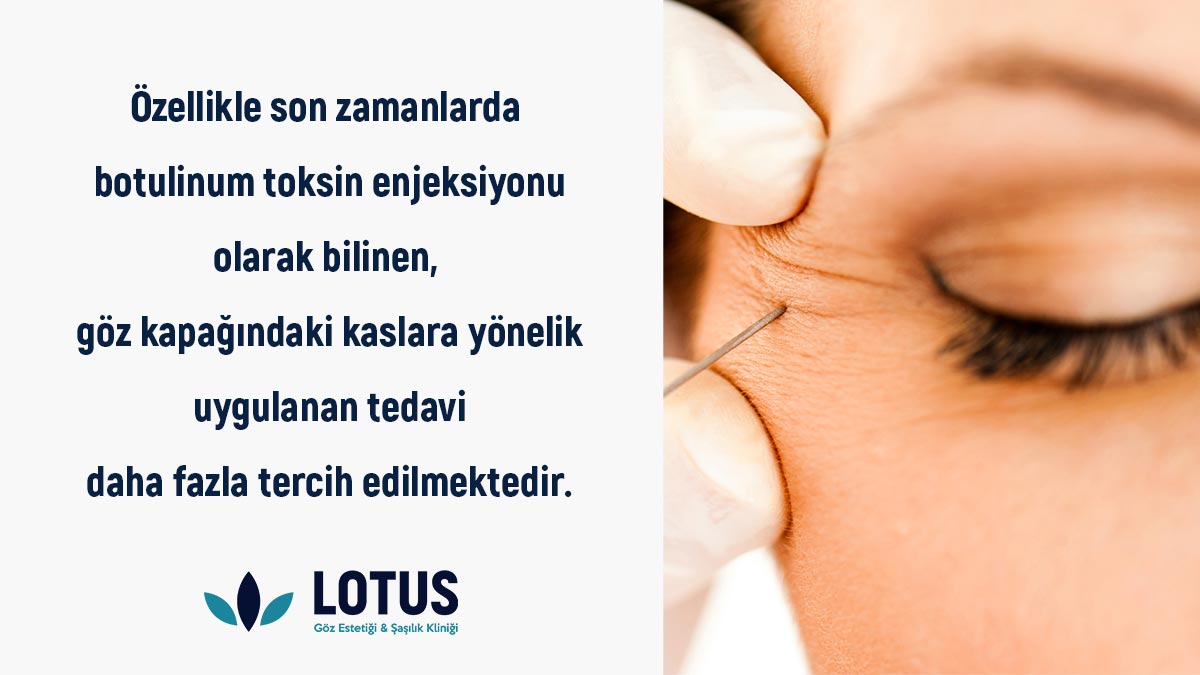
Although long-term medical treatments are applied for the treatment of blepharospasm , it is not possible to say that the desired effects are fully achieved. The relief that medical treatments provide to patients is known to be both short-term and insufficient. Although the effects of treatment vary from person to person, a complete cure cannot be provided. For this reason, medical treatment has become unpreferred lately and people have started to turn to alternative treatments.
With this injection, the symptoms of the disease are significantly reduced. But unfortunately the effects of the injection are not permanent. The effects last for 2 – 6 months.
What is Good for Blepharospasm?
Things that are good for blepharospasm can be evaluated as eliminating the factors that negatively affect the disease. Excessive caffeine consumption, stress, fatigue and alcohol use are among these factors. Therefore, minimizing alcohol or caffeine intake and living a stress-free life will minimize the incidence of spasms. On the other hand, it is known that spasms do not occur during sleep.
Accordingly, it is also thought that an adequate and quality night’s sleep has a positive effect on the frequency of spasms. In addition, adequate consumption of vitamin D and calcium is considered a factor that will reduce spasms.
Eating a balanced diet and consuming sufficient amounts of minerals and vitamins needed by the body, especially the muscular system, stand out as an extremely important point. If these conditions are met, the probability of reducing the severity and frequency of symptoms is quite high. On the other hand, exposure to too much light triggers spasms. Glasses with light refractive and filtering properties reduce the sensitivity of the rays to the eye and, accordingly, prevent the formation of blepharospasm spasms.
Click to follow us on Instagram .