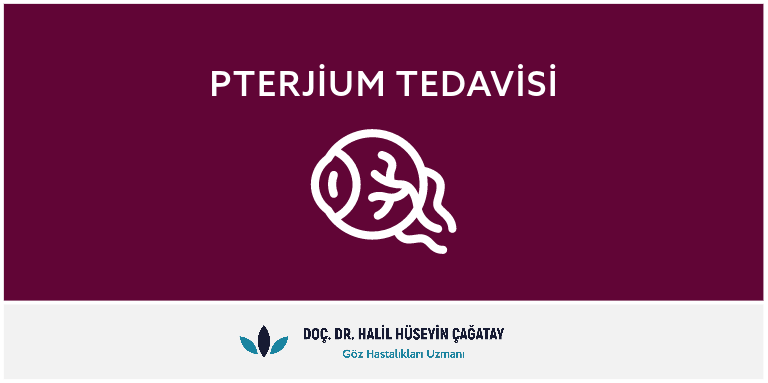
Pterygium , or eyelid as it is commonly known , initially has a slightly vascular structure, and as it progresses, it attaches to the corneal layer. This causes the cornea to retract, resulting in astigmatism .
As a result of astigmatism, blurred vision complaints occur. If the eyelid reaches all the way to the pupil, results such as permanent vision loss may occur. This situation is also described as the popular meat walk among the public. Surgery is the only method used to treat pterygium . Some precautions will need to be taken after the surgery to prevent the problem from recurring.
İçindekiler
What is Pterygium?
Pterygium is popularly known as bird wing or eye flesh. It occurs when the vascular tissue of the membrane layer called conjunctiva, which covers the Sclera region, defined as the white layer of the eye, thickens and grows in an abnormal way and moves to the cornea layer, which forms the outermost part of the eye.
This progressive tissue is also known as fibrovascular tissue . From the moment the tissue in question begins to progress, it causes both the deterioration of the aesthetic structure of the eye and the emergence of various visual defects. It is generally seen in the inner part of the eye, closer to the nose area.
Pterygium can be seen in both eyes. Although it is a non-contagious disease, in some cases the need for surgical intervention may arise. Otherwise, there may be a possibility of situations such as permanent vision loss.
What are the symptoms of pterygium?
Pterygium symptoms are a subject that is curiously researched by many people. The most common symptoms are known as a tissue appearing in the inner part of the eye and complaints such as itching and stinging accompanying this tissue.
The disease begins in the layer that forms the frontmost surface of the eye and progresses to the cornea if necessary intervention is not made. This tissue, which causes astigmatism to appear over time, also brings vision problems. In addition to these symptoms, the following symptoms stand out as the most common symptoms of pterygium :
- Difficulty looking at light, extreme sensitivity to light
- Redness of eyes after bath
- If the patient has an eye defect and uses glasses, the degree of vision may progress rapidly due to the disease.
- Burning, stinging, pain
- Feeling of a foreign object in the eye
- Blurred vision, feeling of dry eyes
- Eye watering, especially when you blink frequently
Causes of Pterygium
The causes of pterygium or eyelid disease stand out as another issue of curiosity. The exact cause of pterygium disease is not known. However, the most effective factor in the emergence of the disease is known to be genetic factors. All the light coming into our eyes is collected in the part of the eye closest to the nose due to the structure of the eyelid and cornea.
Ultraviolet rays that come into contact with the eye due to sunlight reaching this area damage the limbal stem cells in this area and cause the cells to die. With the deterioration of the stem cells in the limbus between the conjunctiva and the cornea, the conjunctiva comes into play and jumps over the dead cells and settles in the corneal tissue.
Pterygium is more common in people who work outdoors and are exposed to dusty and dry air. In addition, all factors that cause dry eyes, such as hot weather, are considered to be among the causes of pterygium development. Additionally, pterygium is seen to be more common in people with chronic eyelash inflammation.
People with allergic eye disease and men are also considered a risk group. However, as we mentioned before, the exact cause of the disease is unknown. Even if you do not have any of these reasons, you may develop pterygium in your eye .
For your questions about pterygium, you can contact us via our Whatsapp contact line.

How is Pterygium Treated?
It is possible to talk about various methods used as the treatment of eye walkers to stop the progression and prevent the disease permanently. Eye drop applications attract attention as a method used to slow down the progression of the disease.
Drop therapy; It is a method used to eliminate eye dryness , slow down or completely stop the progression of the disease, and eliminate inflammation that may occur on the surface of the eye.
These methods are only treatment methods that prevent the disease and slow down its progression. It is not possible to completely eliminate the disease with these methods. Any method other than drop therapy or surgery cannot completely eliminate pterygium. To eliminate pterygium, it is necessary to remove the excess tissue that develops in the area.
The only permanent treatment method for pterygium is surgery. With a surgical operation, excess tissue in the eye is removed and thus the root of the problem is solved. With good surgical practice, the success rate exceeds 85%.

How is Pterygium Surgery Performed?
Operation; It is a treatment method used in cases where the eye disease becomes large enough to affect the patient’s vision, damage the corneal tissue, cause aesthetic defects, or tend to progress towards the center of the cornea. Surgical method is a definitive treatment method. There is a possibility of recurrence of the disease after pterygium surgery .
In addition, the disease can develop much more aggressively in case of recurrence. Therefore, the aim of the surgery is to eliminate the possibility of the disease reoccurring.

In order to reduce the risk of complications, ensure a more comfortable recovery process and ensure successful results of the surgery, it is recommended that you choose ophthalmologists who are experts in their field and are experienced and knowledgeable in the field of microsurgery. Pterygium surgery is currently performed using two different methods.
Pterygium Excision without Graft : The eye area is anesthetized with the help of local anesthesia and the tissue advancing towards the cornea is cut and removed.
Pterygium Excision with Graft : Excision with graft is nowadays preferred more frequently than the method without graft. In this method, the likelihood of the disease recurring after the surgery is lower and the recovery process is more comfortable.
In this method, the eye area is anesthetized with drop anesthesia. The fibroblastic tissue is completely removed with a surgical operation that takes approximately 30 minutes. In order to minimize the possibility of recurrence of the disease, tissue taken from the lower lid of the healthy eye is transplanted to the operated tissue.
This transfer is done using filling adhesives or self-dissolving stitches instead of stitches. In our clinic, we prefer the seamless pterygium surgery technique, that is, autograft pterygium surgery with tissue adhesive . In cases of recurrent pterygium, some medications may be prescribed by the specialist physician to prevent recurrence after surgery.
Things to Consider After Eyelid Surgery
There are some points that you are advised to pay attention to after the surgery in order to reduce the possibility of recurrence of the disease and to ensure a more comfortable recovery process. We can list these issues as follows;
- The use of artificial drops for up to 6 months may be prescribed to support the treatment.
- After the operation, glasses will need to be changed. The change will be made approximately 1 month after the surgery.
- Eyes should be kept as far away from UV light sources as possible, such as sunlight. For this reason, you will need to use sunglasses in daily life, especially if you have a lifestyle that is exposed to a lot of sunlight.
- You should definitely stay away from dusty environments. If you cannot escape from these environments and work in these environments, you should use protective glasses.
- Artificial drops should be used, especially in dry environments. You must prevent dry eyes.
Click to follow us on Instagram .