
Laser eye surgery is a surgery that is frequently performed today to eliminate refractive errors of the eye. After the surgery, patients get rid of the glasses or contact lenses they were using. In which cases is laser surgery required, what are its advantages, to whom can it be performed, is it reliable and the answers to similar questions are in this article.
İçindekiler
- In Which Situations Is Laser Eye Surgery Performed?
- Who is a Suitable Candidate for Laser Eye Surgery?
- Advantages of Laser Surgery
- Examination Before Eye Removal Surgery
- How is Laser Eye Surgeries Done?
- After Laser Eye Surgery
- Does eye size increase again after eye contouring surgery?
- Is Excimer Laser Treatment Safe?
- What are the Risks of Laser Eye Surgery?
- The Relationship between Laser Eye Surgery and Cataracts
- Laser Eye Surgery Prices 2024
In Which Situations Is Laser Eye Surgery Performed?
Laser eye surgery is an umbrella term. Only treatments aimed at eliminating corneal refractive errors fall under this umbrella. It is possible for patients to get rid of myopia , hyperopia , astigmatism and presbyopia, which are refractive errors of the eye, with laser surgery, which can be performed with different methods using excimer laser .
Laser surgery, which has been referred to as “eye scratching” or “getting rid of glasses with laser” , or refractive surgery as it is known in medicine, is a surgery that has been performed around the world for many years and has a high success rate.
Who is a Suitable Candidate for Laser Eye Surgery?
Laser eye surgery is for patients who do not want to wear glasses or contact lenses for various reasons and is performed only in line with the patient’s wishes and conscious decision.
It is not possible to perform laser eye surgery for every patient and to eliminate eye diseases other than refractive error.
Myopia up to 10 degrees, hyperopia up to 6 degrees and astigmatism can be treated with excimer laser. Laser surgical intervention is not performed for those with higher degrees of visual impairment. In addition, in order for the patient to undergo laser surgery, the eye number must not have changed in the last year.
The suitable age group for surgery is 18 to 40. Patients under the age of 18, especially those with progressive visual impairment, are not suitable for eye contouring surgery . Pregnant women, postpartum women, diabetics, rheumatism patients, those with structural defects in their corneas, and those with corneal thickness less than expected cannot have laser surgery.
In addition, patients diagnosed with glaucoma and cataract, patients with eye infection or herpes are excluded from the target group of excimer laser.

Advantages of Laser Surgery
People with refractive errors in their eyes must use glasses or contact lenses (soft/hard) for clear vision. Although the benefits of these two tools are undeniable, in some cases they can cause discomfort to the user.
For example, glasses can cause irritation of the skin on the nose or around the ear in hot weather or prevent the person from exercising freely. Contact lenses require daily care, which can cause trouble for the person.
Additionally, contact lens users may experience eye discomfort in windy weather or dusty environments. Apart from all these reasons, people may feel the need to abandon these tools in order to achieve a natural look. Excimer laser meets this need.
In addition to saving the person from the mentioned ailments, laser surgery also has important advantages such as being performed in a very short time, not causing pain, and not requiring hospitalization. The advantage of excimer laser treatment is that patients can return to their normal lives the day after the operation.
Examination Before Eye Removal Surgery
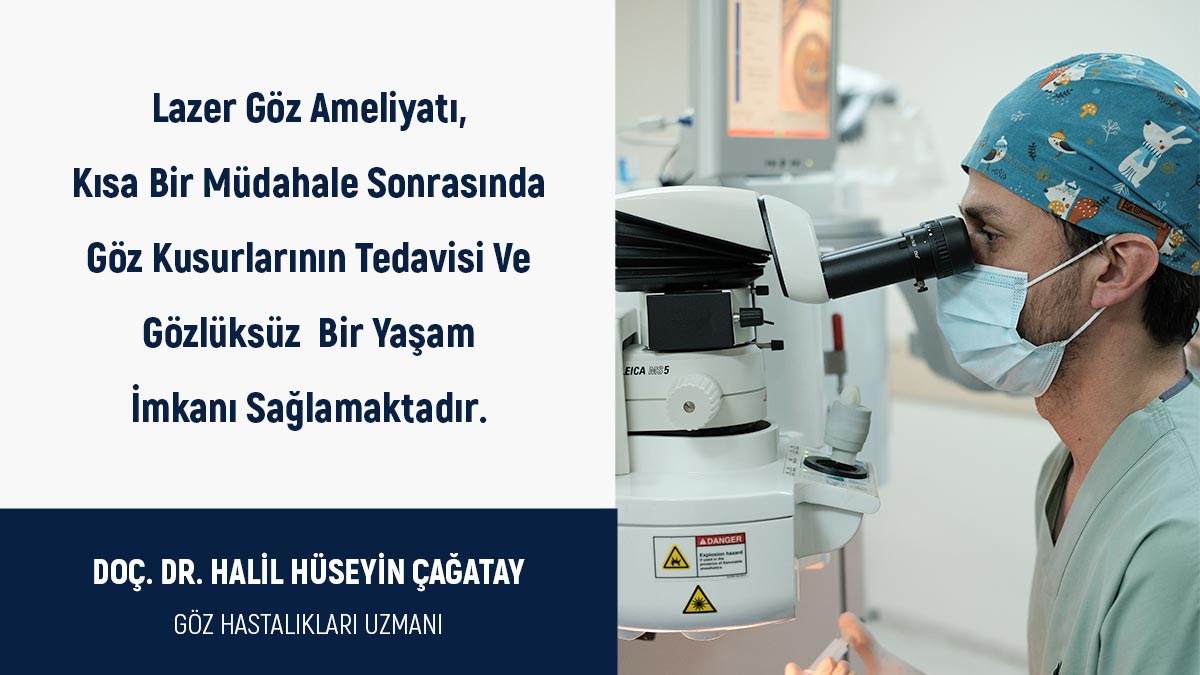
Patients who are considering eye surgery are first informed about the surgery process and then examined in detail. Within the scope of this examination:
- The eye number is determined and it is evaluated whether the number is within the required range for surgery.
- Corneal thickness is measured with the corneal surface map. In this measurement, suitability is sought for eye contouring surgery.
- The refractive map of the eye is tested. It is checked whether there is any other eye disorder other than the corneal refractive error.
- The diameter of the pupil is measured.
If the patient is evaluated as a suitable candidate for excimer laser treatment after a meticulous examination, the surgery date is determined.

There are a few important rules that patients must follow before laser surgery . These:
- Stopping contact lens use: Hard contact lenses should not be worn for three weeks, and soft contact lenses should not be worn for one week.
- Avoiding make-up: No cosmetic product should be applied to the eyes, around the eyes and face on the day of surgery.
- Light diet: Although the level of satiety does not matter for the operation, it is recommended that patients enter the surgery by eating something light.
- Wearing comfortable clothes: It is recommended that the patient wear clothes that he feels comfortable in when coming to the operation.
Before laser surgery, drops are placed in the patient’s eyes. This drop creates an anesthetic effect, ensuring that the patient is not affected by the interventions and also slows down the reflexes. To prevent the eyes from blinking, a speculum is used to fix the eyelids open at the beginning of the operation.
How is Laser Eye Surgeries Done?

Laser eye surgeries can be performed with three different methods using excimer laser:
LASIK (Laser Assisted in-Situ Keratomileusis): It is frequently used to treat general refractive errors of the eye (myopia, hyperopia, astigmatism) using excimer laser. Although the main reason for its widespread preference is the success achieved, the fact that the surgery is completed in a short time and the patient does not feel any pain during the procedure is also effective in its popularity.
LASIK, laser eye surgery, begins with numbing the patient’s eyes using drops. The surgery is in three stages: In the first stage, the surface of the transparent cornea is lifted in a layer (flap). In the second stage, the corneal layer is intervened using an excimer laser to correct the refractive error. In the third and final stage, the flap that was removed in the first stage is placed back in its previous position. In the LASIK method, no stitches are used, and the area is expected to heal on its own.
PRK (Photorefractive Keratomileusis): It was the most commonly used method before the LASIK method was developed. In PRK, unlike the LASIK method, the surface of the cornea (flap) is not lifted. Therefore, PRK is a one-stage process in which the excimer laser is applied directly to the corneal surface. This method, which is included in the “surface treatment” group, is generally preferred if there is an irregularity in the structure of the patient’s cornea or in patients with low corneal thickness. However, the eye number of the patient on whom the method will be applied must be fixed, that is, it must not have changed for a year.
Its disadvantages are that it is less successful in treating hyperopia than LASIK (they are equally effective for myopia and astigmatism), the patient may experience pain after the operation (it may take 48 hours), the patient’s vision is blurred for a few weeks, and recovery takes a long time. On the other hand, when laser eye surgery is performed with the PRK method, it takes less time than LASIK and is simpler because it is a single stage.
TransPRK: In the TransPRK method, also known as No Touch Laser, excimer laser is used to remove the epithelial layer and intervene in the corneal stroma. Eliminated epithelial cells are renewed within a few days.
Eye scratch surgery takes approximately fifteen minutes. On the other hand, since the excimer laser focuses on the cornea and the cornea is a tissue without vessels, there is no bleeding during the surgery.

For your questions about laser surgeries, you can contact us via our Whatsapp contact line.

After Laser Eye Surgery
Immediately following eye surgery performed with excimer laser, some symptoms (watering, stinging, blurred vision, etc.) may be observed in the eyes that may disturb the patient. These symptoms disappear within six hours to two days following the operation (If surface treatment has been applied, this period may take a little longer). Full recovery takes between two and four months, although it varies from person to person.
Recovery after laser eye surgery begins to occur rapidly. Patients can even continue their lives where they left off the day after the operation. There are no obstacles to going to school or work or traveling.
The most important issues to consider during the recovery period are to regularly use antibiotics and cortisone drops prescribed by the physician and to comply with the designated control days. Apart from these, patients are advised not to lie face down for a while after laser eye surgery , not to go out without UV filtered sunglasses, not to put pressure on the eye area (such as rubbing), not to contact the eyes and the surrounding area with cosmetic products, not to go to the sea or the pool for seven days, and not to do heavy sports. .

Does eye size increase again after eye contouring surgery?
In some patients (5%), not all of their eye numbers can be removed with eye contouring surgery . These problems, which will force the patient to use glasses again, can be corrected with a new procedure. Except for these very rare cases, the degrees do not return when the refractive error is treated with excimer laser.
Is Excimer Laser Treatment Safe?
Eye contouring surgery is a surgery that provides successful results when performed on suitable patients. The reliability of this treatment method, which has been used all over the world for many years, has increased in parallel with the development of technology. It can be said that if excimer laser technology is used in the right hands and on the right patient, it will not cause serious complications and possible risks will be reduced.
What are the Risks of Laser Eye Surgery?
Laser eye surgery , although the method used varies, ultimately carries some risks since it is an external surgical intervention on the body. Some of these risks are similar to those that may occur with any surgery. For example, the risk of infection is in this group. In order to minimize the possibility of eye infection, antibiotic drops prescribed by the physician should be used regularly, in the prescribed manner and for the specified period of time.
Damage to the flap may occur during laser surgery . Although it is possible for the corneal surface to tear, perforate, and sometimes completely rupture, these risks have been minimized with developing technology.
Another risk that laser eye surgery may bring is ectasia. If the cornea stands out in a curved manner and becomes thinner after the surgery, the presence of ectasia can be mentioned. This problem is mostly seen in young patients with high refractive error. In order to avoid the risk of ectasia, it is very important to clearly determine whether the patient is suitable for excimer laser treatment and to have laser eye surgery performed by expert hands.
The Relationship between Laser Eye Surgery and Cataracts
There is a false belief that laser eye surgery triggers the formation of cataracts, which occur when the intraocular lens loses its properties such as transparency and flexibility.
In fact, excimer laser treatment has nothing to do with cataract formation. On the other hand, if a patient who has had laser surgery is diagnosed with cataract in the future, the laser treatment he has undergone does not constitute an obstacle to cataract treatment .
Laser Eye Surgery Prices 2024
Laser eye surgery , as mentioned, is performed using different methods and the chosen method directly affects the surgery prices. However, if additional examinations and treatments are deemed necessary, this will also be reflected in the prices. In this context, you can contact us for up-to-date and clear price information.
Click Here for Your Questions About Laser Surgery and to Get Current Price Information .
If you are a glasses or contact lens user and want to continue your life without these tools, you can consult our expert ophthalmologists to evaluate whether you are a suitable candidate for laser eye surgery .
Click to follow us on Instagram .