

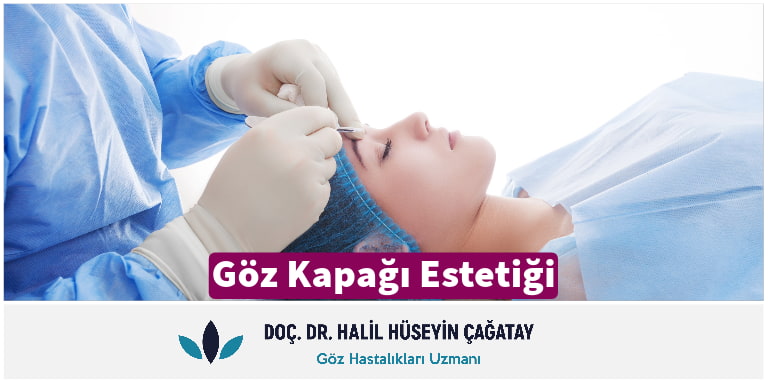
Eyelid surgery is known as “Blepharoplasty” in the medical literature and is frequently preferred. In particular, the movement of the muscles around the eye and wearing out the tissues after a while or the effect of gravity are the first reflections of aging.
İçindekiler
- 1) Why is Eyelid Aesthetics Performed?
- 2) Who Can Have Eyelid Aesthetics?
- 3) How to Plan Eye Aesthetic Surgery?
- 4) How is Eyelid Surgery Performed?
- 5) Is Eye Aesthetics Permanent?
- 6) Does Eye Plastic Surgery Help You Look Younger?
- 7) Will Scars Appear After Blepharoplasty?
- 8) What are the Risks Related to Blepharoplasty?
1) Why is Eyelid Aesthetics Performed?
Although it produces different results for everyone, at the end of this process, there may be obvious bagging in the lower eyelid, sagging, loosening or herniation of fatty tissues in the lower part of the eyelid. This may narrow the angle of view or reduce the quality of vision.
On the other hand, it may cause undesirable aesthetic results. However, it may lower a person’s self-confidence or negatively affect the quality of daily life. All these reasonable reasons may lead people to eyelid aesthetics.
2) Who Can Have Eyelid Aesthetics?
Nowadays , eyelid aesthetics is popular among the masses. Especially people who face serious sagging problems in their eyelids due to aging or who have problems in the said area due to genetic reasons, primarily benefit from eyelid aesthetics.
Meanwhile, traumas or infections resulting from accidents can also be accepted as a routine reason for Blepharoplasty. On the other hand, people with thyroid or diabetes undergoing eye aesthetic surgery may pose a risk in some special cases. This also applies to problems such as eye pressure or dry eye syndrome.
3) How to Plan Eye Aesthetic Surgery?
Before undergoing eye aesthetic surgery, your physician must reveal all risk factors and create the most ideal treatment plan for the person. Therefore, your disease history and history will be evaluated as a determining factor.
Before blepharoplasty procedures, the patient must stop using antibiotics at least 15 days in advance. Likewise, it would be beneficial to stop using aspirin. Because such medications may increase the possibility of bleeding during surgery. Herbal supplements, alcohol and cigarettes can also negatively affect the process before and after the surgery.
Your physician; As a result of the examinations it carries out, it decides which surgical method may be more appropriate for you. While doing this, it guides you on what you need to pay attention to, especially before surgery.
Before the surgery, the necessary drawings and measurements are made on the naturally curved points of the eye. A physical examination of the forehead and eyebrow areas is performed. It is checked whether there is a problem with asymmetry in the eyelid. Your doctor, who will perform the surgery, will also examine the level of the eyebrows.

4) How is Eyelid Surgery Performed?
Eyelid surgery is usually performed with local anesthesia technique. However, in some special cases or depending on the patient’s demands, it may be possible to use sedation or general anesthesia techniques.
While cautery or scalpel can be used for incision, it is also possible to use laser technologies.
Lower eyelid aesthetics is mostly performed on the eyelash line or in the area inside the eyelid with a technique called transconjunctival.
Upper eyelid aesthetics can sometimes be combined with eyebrow and temple lifting procedures. If your physician prefers to perform upper eyelid aesthetics only, local anesthesia will be a suitable choice.
The doctor plans in advance how much fat tissue, skin or muscle will be removed from this area. It adjusts the tissues to be removed to create an appropriate level of tension. This process usually takes less than 1 hour.
Before lower eyelid aesthetics, a procedure called hanging is applied to the sagging fat pads. In some cases, this practice produces results in itself. In this way, it is deemed unnecessary for the person to perform lower eye aesthetic surgery specifically. However, if excess tissue and bags-like conditions continue despite this procedure, your physician may make a decision for lower eyelid aesthetic surgery .
5) Is Eye Aesthetics Permanent?
The success rate in eyelid aesthetics is extremely high. The application is carried out largely without any problems and, more importantly, if proper maintenance is carried out, its positive effect will continue for many years.
The effect duration of this permanent application is approximately 10-15 years. Due to the effects of facial expressions, aging or gravity, the person may need a surgical procedure again in the following years.

6) Does Eye Plastic Surgery Help You Look Younger?
Eye aesthetic surgery generally arises from the need to respond to aesthetic concerns. As in many other aesthetic applications, the aim of eye aesthetics is to have a very young and lively appearance. After this operation, the main motivations are to hide the possible and natural effects of aging and to give a fit appearance.
7) Will Scars Appear After Blepharoplasty?
After blepharoplasty, there are no obvious surgical scars, except in special cases. Of course, right after the application, there may be very fine lines, especially in the folds of the upper eyelid, under the eyelashes or on the lower eyelids.
However, these fine lines disappear completely after a while, thanks to the body renewing itself. Therefore, it is not possible to talk about a permanent scar in the long term. This type of surgery scars may vary depending on the content of the procedure. In the worst case scenario, at the end of one year, the person will not have any surgical scars when viewed from the outside.
8) What are the Risks Related to Blepharoplasty?
As with all surgeries, it is possible to mention certain risks in eyelid surgeries. But these; These are general risks specific to the nature of the surgery, such as bleeding, infection or bruising.
For a short time after the surgery, the person may have blurry vision or difficulty blinking. The person may also sometimes face dry eye problems. However, such symptoms do not reduce the person’s quality of life and, more importantly, disappear a few days after the surgery.
Click to follow us on Instagram .