İçindekiler
- Inward Eye Deviation (Esotropia): Causes, Symptoms, Types, and Treatment
- What Causes Inward Eye Deviation?
- Common Causes of Esotropia
- Inward Eye Deviation in Adults
- Symptoms of Inward Eye Deviation
- How Is Inward Strabismus Treated?
- Non-Surgical Treatment Options
- Surgical Treatment
- Types of Inward Eye Deviation
- Infantile Esotropia
- Accommodative Esotropia
- Non-Accommodative Childhood Esotropia
- Adult-Onset Esotropia
- How Can Inward Eye Deviation Be Corrected?
- For your questions about eye rolling, you can contact us via our Whatsapp contact line.
- Click to follow us on Instagram .
Inward Eye Deviation (Esotropia): Causes, Symptoms, Types, and Treatment
Inward eye deviation or inward eye squint medically known as esotropia, is a form of strabismus in which one or both eyes turn toward the nose. This condition may affect only one eye or both eyes simultaneously. When a single eye is involved, untreated misalignment can lead to amblyopia (lazy eye) and permanent vision loss.
For this reason, early diagnosis by an ophthalmologist is crucial. Esotropia most commonly develops in childhood, although adult-onset cases may occur due to neurological causes such as sixth cranial nerve palsy. With proper evaluation and timely treatment, inward eye deviation can often be successfully corrected.
What Causes Inward Eye Deviation?
Several medical and anatomical factors may contribute to inward eye deviation. The underlying cause often determines both the treatment approach and prognosis.
Common Causes of Esotropia
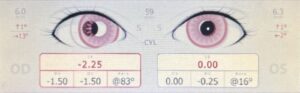
The most frequent cause of inward strabismus is high-grade hyperopia (farsightedness). Hypermetropia may appear as early as 1–2 years of age and can lead to eye misalignment during childhood. While glasses usually improve alignment, the deviation may reappear when corrective lenses are removed.
Other possible causes include:
Eye or head trauma
Severe febrile or viral illnesses
Unequal refractive errors between the eyes
Family history of strabismus
Congenital visual defects
Significant differences in vision between the two eyes increase the risk of amblyopia if left untreated.
Inward Eye Deviation in Adults
Among adults, one of the most common causes of inward eye deviation is sixth nerve palsy. This cranial nerve controls the lateral rectus muscle, which moves the eye outward. When nerve conduction is impaired, outward movement becomes limited, causing the eye to drift inward—especially when looking to the side.
Adult esotropia may also develop due to:
Brain trauma or tumors
Vascular diseases or aneurysms
Neurological disorders
Progression of childhood strabismus
In advanced cases, double vision (diplopia) often occurs, particularly when focusing on distant objects. Symptoms tend to worsen with fatigue, a condition known as divergence insufficiency.
Symptoms of Inward Eye Deviation
Common symptoms associated with esotropia include:
Visible inward turning of one or both eyes
Double vision, especially at distance
Eye strain and frequent headaches
Difficulty focusing
Abnormal head posture in children
Prompt evaluation is recommended if any of these symptoms are observed.

How Is Inward Strabismus Treated?
Treatment depends on the cause, age of the patient, and severity of the deviation.
Non-Surgical Treatment Options
In many cases, prescription glasses are the first line of treatment. Glasses may fully correct the deviation or significantly reduce it. For near-vision misalignment, lenses with near-addition support are often prescribed.
Drop therapy may also be used in combination with glasses to improve results, particularly in children.
Surgical Treatment
When inward eye deviation does not improve with glasses or medical therapy, strabismus surgery may be required. Surgical correction involves adjusting the eye muscles to restore proper alignment.

Types of Inward Eye Deviation
The classification of esotropia depends on its cause and age of onset.
Infantile Esotropia
Infantile esotropia typically begins between 1 and 4 months of age and becomes more apparent by 6–7 months. The deviation is constant and present in all gaze positions. A common sign is cross-fixation, where the child uses the right eye to look left and the left eye to look right.
Accommodative Esotropia
Accommodative esotropia is associated with hypermetropia and usually appears after the age of two. This type is often successfully treated with glasses.
Non-Accommodative Childhood Esotropia
Some forms of inward eye deviation in children are unrelated to refractive errors and do not respond to glasses alone.
Adult-Onset Esotropia
In adults, inward eye deviation may result from neurological conditions or the progression of untreated childhood strabismus. Sudden onset with double vision requires urgent neurological evaluation.
How Can Inward Eye Deviation Be Corrected?
Successful correction depends on early diagnosis, accurate refractive correction, and consistent treatment. While glasses and medical therapy are often effective, surgical intervention remains a reliable option when non-surgical methods fail.
For your questions about eye rolling, you can contact us via our Whatsapp contact line.
Click to follow us on Instagram .