
İçindekiler
- What Is Amblyopia (Lazy Eye)?
- When Should a Child See a Specialist?
- When Lazy Eye Leads to Eye Misalignment (Strabismus)
- Can Surgery Correct Eye Misalignment from Lazy Eye?
- Important: Surgery and Vision Improvement
- When Is Strabismus Surgery Recommended?
- Benefits of Strabismus Surgery
- The Best Results Come from a Comprehensive Approach
- Final Takeaway
What Is Amblyopia (Lazy Eye)?
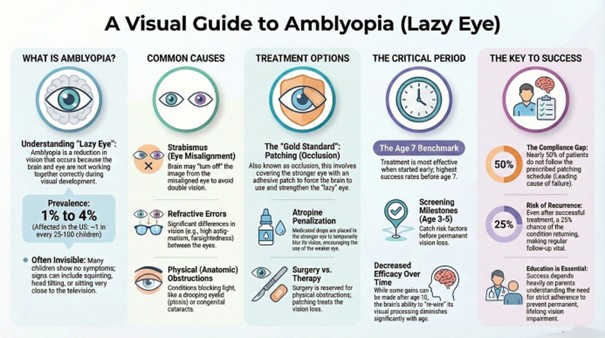
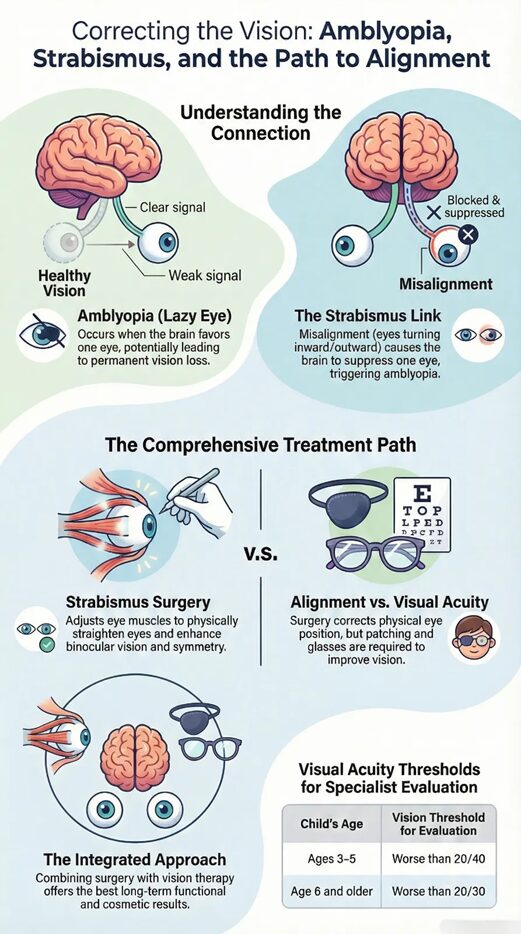
Amblyopia, commonly called lazy eye, is a vision problem that usually develops in early childhood. It happens when one eye does not develop normal vision because the brain and the eye are not working together properly.
Over time, the brain begins to favor the stronger eye and ignores the weaker one. If not treated early, this can lead to permanent vision loss in the affected eye.
When Should a Child See a Specialist?
Early diagnosis is very important.
- Children ages 3–5 with vision worse than 20/40
- Children age 6 and older with vision worse than 20/30
should be evaluated by an eye specialist as soon as possible.
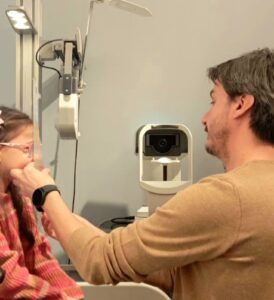
When Lazy Eye Leads to Eye Misalignment (Strabismus)
In some children, amblyopia (lazy eye) is linked to strabismus, a condition where the eyes are not properly aligned. One eye may turn outward or upward.
When this happens, the brain may ignore the misaligned eye to avoid double vision. Over time, this can weaken vision in that eye and lead to amblyopia.
In other words:
- Eye misalignment can cause lazy eye.
- Lazy eye can also develop because the brain suppresses a misaligned eye.
- The two conditions are often connected and may need combined treatment.
Click here to take a look our another article about strabismus (squint eye) surgery
Can Surgery Correct Eye Misalignment from Lazy Eye?
Yes. Strabismus surgery (eye muscle surgery) can correct the physical misalignment of the eyes.
At our clinic, we perform strabismus surgery to:
- Straighten crossed or drifting eyes
- Improve eye alignment
- Enhance facial symmetry and appearance
- Support better binocular (two-eye) vision
The procedure works by adjusting the eye muscles. The muscles may be strengthened, weakened, or repositioned to help the eyes move together properly.
Important: Surgery and Vision Improvement
It is important to understand the difference between:
- Correcting eye alignment
- Improving vision in a lazy eye
Strabismus surgery corrects the alignment of the eyes.
However, additional treatment such as:
- Glasses
- Patching
- Atropine drops
- Vision therapy
may still be necessary to strengthen the weaker eye.
In many cases, combining amblyopia treatment with strabismus surgery provides the best functional and cosmetic results.
When Is Strabismus Surgery Recommended?
Eye muscle surgery may be recommended if:
- The eye turn is constant or significant
- Glasses alone do not correct the misalignment
- The child has poor binocular vision
- There are cosmetic or psychosocial concerns
- The misalignment persists despite amblyopia treatment
Early surgical correction can help improve eye coordination and may support better visual development.
Benefits of Strabismus Surgery
Patients and parents often notice:
- Straighter eyes
- Improved self-confidence
- Better depth perception (in some cases)
- Reduced risk of long-term suppression of the weaker eye
Strabismus surgery is generally safe and performed as a short outpatient procedure.
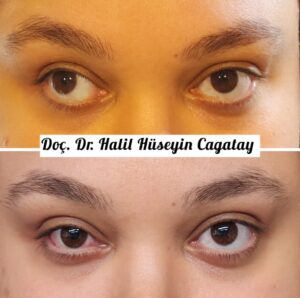
The Best Results Come from a Comprehensive Approach
For children with both lazy eye and strabismus, treatment often includes:
- Strengthening the weaker eye (patching or drops)
- Correcting refractive errors with glasses
- Performing strabismus surgery when needed
This combined approach offers the best chance for long-term visual stability and healthy eye alignment.
For more information click here

Final Takeaway
Lazy eye and eye misalignment are closely connected conditions. While amblyopia affects vision, strabismus affects eye position. When both are present, treating them together is essential.
If your child has squint eyes along with reduced vision, a comprehensive evaluation by an experienced eye specialist can determine whether strabismus surgery is the right solution.
Early intervention can protect vision, improve alignment, and support your child’s visual development for life.
Click here to take a look our instagram page